If you’ve spent more than five minutes researching adventure travel for trekking in Nepal, you’ve probably seen a famous phrase plastered across t-shirts in Kathmandu, painted on teahouse walls, or chanted by local guides:
“Dal Bhat Power, 24 Hour!”

When you are tackling steep stone staircases, crossing high-altitude passes, and burning upwards of 3,000 calories a day, western comfort foods like pizza or french fries just won’t cut it. To survive and thrive on a challenging Himalayan trek, you need to eat like a local.
Here is why this traditional meal is essential for trekking in Nepal, and how to eat it like a pro.
Anatomy of the Ultimate Himalayan Trek Fuel
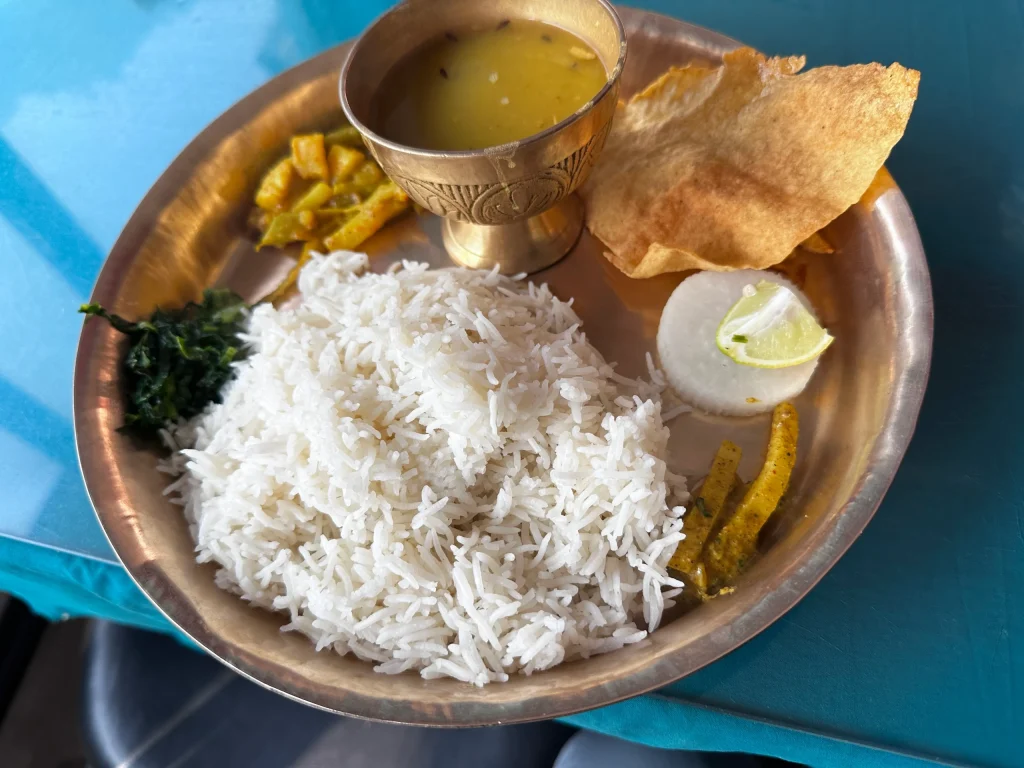
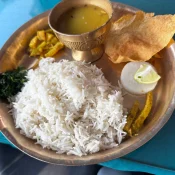
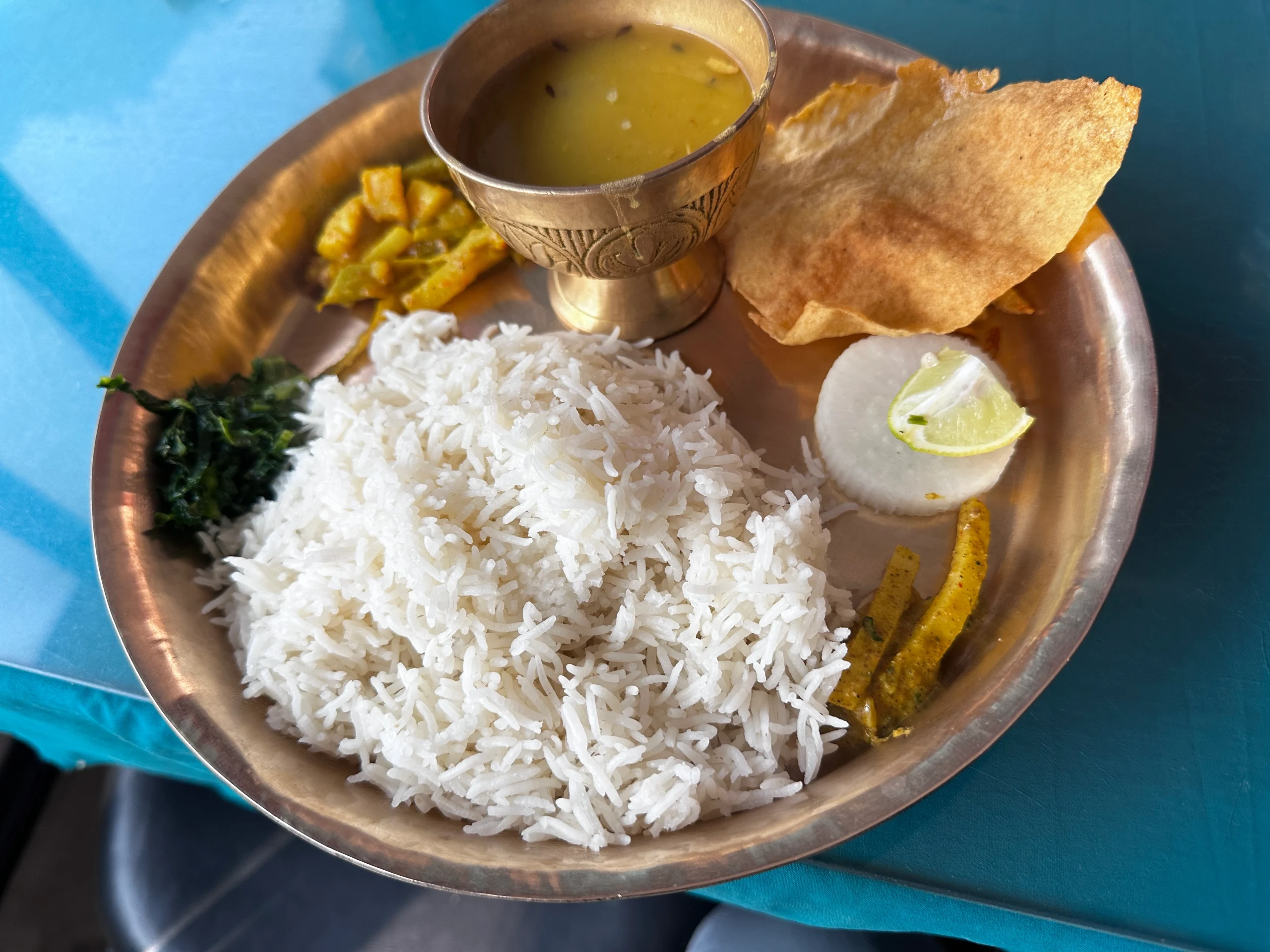
Dal Bhat isn’t just a single dish; it’s a perfectly balanced, multi-part meal traditionally served on a heavy brass platter (a thali). While every remote mountain kitchen has its own secret spice blend, a standard serving contains a powerhouse of nutrients designed for high-altitude endurance:
- Bhat (The Carbohydrate Base): A generous mountain of steamed rice. This provides the fast-acting carbohydrates your muscles need to keep moving up endless mountain switchbacks.
- Dal (The Protein & Hydration): A savory soup made from simmered lentils, packed with plant-based protein to repair your muscles after a hard day of hiking. It is also a fantastic way to sneak in extra fluids and salt to stay hydrated.
- Tarkari (The Vitamins): A seasonal vegetable curry—usually a mix of potatoes, cauliflower, greens, or cabbage—loaded with essential vitamins.
- Achar (The Flavor Kick): A fiery, tangy pickle or chutney made from tomato, radish, or coriander. It cuts through the rich flavors and stimulates your digestion.
- Papad (The Crunch): A crisp, fried flatbread made from lentil flour that adds a satisfying texture to the meal.
The Secret Trick: The Magic Word for Free Refills
Here is the best part about ordering this dish at a local teahouse: It is a bottomless plate.
When you order western dishes like spaghetti or burgers on paths like the Annapurna Circuit, what you see is what you get. However, when you choose the traditional option, the hospitality is endless. Once you finish your initial serving, the kitchen staff or your guide will walk around the dining room with pots of hot rice, dal, and curry, offering you seconds, thirds, and fourths.
The magic word you need to know is “Thapnu” (pronounced thup-noo), which translates to “to add more.”
As long as you have space in your stomach, they will keep fueling you up. For a hungry adventurer pacing their budget, it is easily the best value meal in the mountains.
The Science of High-Altitude Nutrition
There’s a reason Nepalese porters and guides can carry 60-pound packs up vertical mountain faces while barely breaking a sweat, all powered exclusively by this dish.
From a nutritional standpoint, the combination of rice (grains) and dal (legumes) creates a complete protein. Consequently, this meal provides all nine essential amino acids that your body cannot produce on its own. Combined with the complex carbs from the vegetables, it delivers a slow, steady release of energy rather than the sudden sugar crash you might get from a candy bar.
Furthermore, it is incredibly easy on sensitive stomachs. Garlic, ginger, and turmeric—staples of Nepalese cooking—are natural anti-inflammatories that aid digestion, helping you avoid altitude-induced nausea during the best trekking season.
Guide Etiquette: How to Eat it Like a Local
Want to earn some serious respect from your local guiding team? Skip the spoon and fork.
Traditional local food is eaten with the right hand. First, wash your hands thoroughly. Second, pour a bit of the lentil soup over your rice. Finally, use your fingers to mix the curry, dal, and rice together into a small ball and push the food into your mouth using your thumb.
Note: Never use your left hand to eat or pass food, as it is traditionally considered unclean.
Eating with your hands isn’t just a fun cultural experience—locals swear it makes the food taste significantly better. Give it a try on your very first night on the trail!
Ready to test your own ‘Dal Bhat Power’ on the world’s highest trails?
Check out our upcoming departures for the Langtang Region Trek or explore our customizable itineraries for trekking in Nepal to start planning your ultimate adventure today.